


Project Jazzgame
4.699.00 Reviews
App Specs
- Version
- 0.0.498
- Updated On
- License
- Free
- Downloads
- 500,000+
- Developer
- VEETEE Games
- Categories
- Adventure
- Platform
- Android
Screenshots
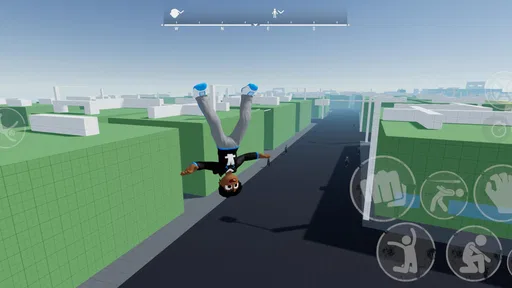
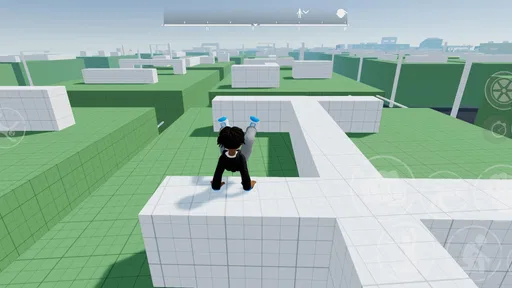
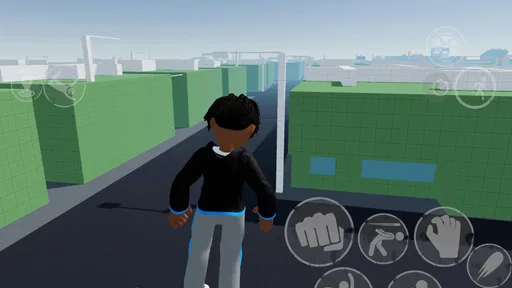
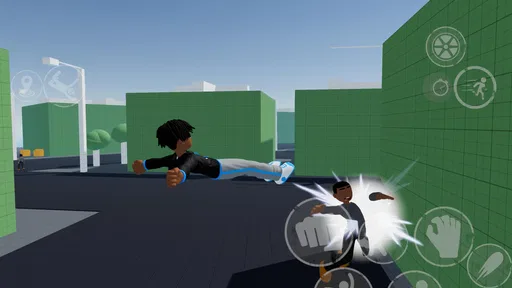
 Analysis by AppCompare
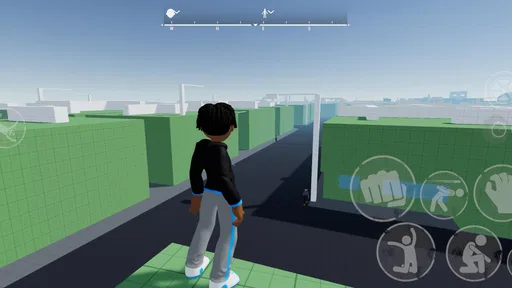
I spent time with Project Jazzgame as a free adventure game built around open-world movement and combat. Its basic appeal is easy to understand: instead of moving through a narrow sequence of stages, you get room to travel, climb, jump, and confront enemies while deciding how to approach the environment. That combination makes it more interesting than a straightforward action game, especially if you enjoy the feeling of finding your own route rather than following a fixed corridor.
What makes this release worth discussing is not just the parkour idea, but the balance between freedom, fighting, progression pressure, and spending. VEETEE Games presents it as an accessible game for Everyone, and the Android listing shows a 4.6 average from around 5,400 ratings. That is a strong first impression, although a rating alone cannot tell you whether the game will suit your preferred pace or control style.
I would describe it as a game to try when you want a quick dose of movement and combat without paying an entry fee. I would not automatically recommend it to somebody looking for a fully explained, deeply structured open-world adventure. The experience is more appealing when you enjoy experimenting and accepting a little uncertainty.
How the open-world parkour idea feels in practice
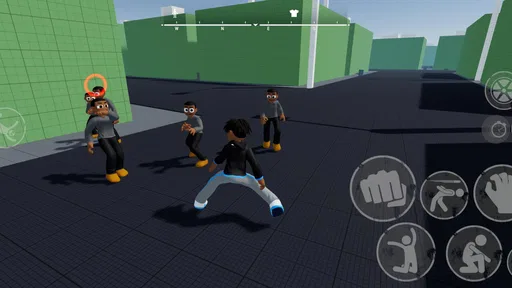
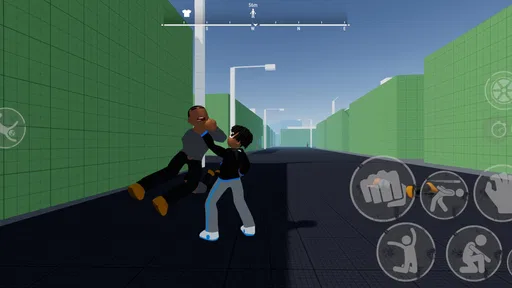
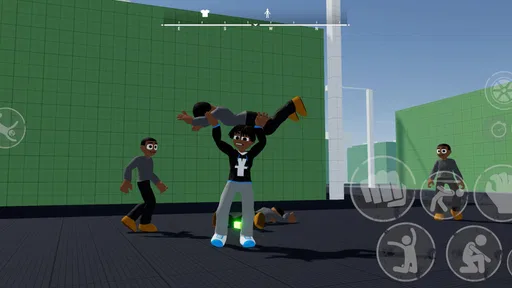
The central pleasure comes from linking movement and combat instead of treating them as completely separate activities. Parkour gives you a reason to look at the surroundings differently. A wall, ledge, open route, or elevated position can become part of your plan, while enemies give that movement a practical purpose. Even when the action is simple, the combination encourages you to think about where you are standing before you attack.
I found that this kind of design works best when I resisted the urge to rush directly toward every enemy. Moving first, checking the nearby space, and choosing a route can make the encounter feel more deliberate. That is one of the useful habits to develop early: treat the environment as part of the fight rather than as decoration behind it.
The open-world format also changes how I judge a short play session. In a conventional level-based game, I expect a clear beginning, middle, and end. Here, a session can be satisfying simply because I reached a new area, found a better line through the surroundings, or handled an enemy encounter more cleanly than before. That makes it suitable for casual play, but it may frustrate players who need constant mission markers and obvious rewards.
The trade-off is freedom versus clarity. A more guided adventure usually tells you exactly what to do next. Project Jazzgame appears more attractive when you want to make small decisions for yourself, but that also means you need patience while learning how the world and its challenges fit together.
Worth Reading Before You Choose

EA SPORTS FC Mobile 26 Is a Bigger Football Game, but It Takes Time

Flipboard Shows What News Apps Must Do Beyond the Feed

Switching to Android Auto Means Rethinking Your Driving Routine

Google Calendar Makes a Crowded Week Easier to Manage

Ludo King Makes the Most of the Minutes Between Plans

Baby Panda World Brings Quick Play to Modern Phones, but Its Game Library Feels Busy
Movement is more than a visual trick
Parkour in an action game can easily become a decorative feature, used only between battles. The stronger approach is to make movement affect positioning, escape, and timing. That is how I recommend approaching this game: do not see jumping and traversal as a loading screen between fights. Use them to create distance, reach a better angle, or avoid standing in the same place for too long.
A practical routine is to pause briefly before entering a crowded area. Look for the route that gives you the most room to move, then decide whether you want to engage immediately or reposition first. This is a small change in behavior, but it can reduce the feeling that combat is random or cramped. It also gives the open-world design a real purpose.
Players who enjoy movement challenges should get more from this structure than players who only want fast attacks. If your favorite action games are built around careful aiming, heavy character builds, or long dialogue sequences, the parkour focus may feel like a distraction rather than the main attraction.
Combat rewards awareness, not just aggression
The store summary places battling enemies alongside parkour, so combat is clearly one of the game’s defining activities. My advice is to avoid judging it only by how quickly you can defeat an opponent. In an open environment, the better question is whether you can control the space around the encounter.
When I play this kind of game, I get better results by separating movement into two jobs. The first is approach: reaching the encounter without giving up all available space. The second is recovery: keeping a route open if the situation becomes uncomfortable. That simple distinction is more useful than repeatedly attacking until something works.
This also creates a natural learning curve. Early fights can teach you which routes are safe, when to stop advancing, and how much room you need to react. If you pay attention to those details, later encounters feel less like obstacles and more like tests of movement planning.
Progress, pressure, and the cost of playing for free
The game is free to download and play, with optional in-app purchases listed at between $2.99 and $4.99 per item. That gives the entry point a clear advantage: you can test the movement and combat before deciding whether the experience deserves any spending. For me, that is the right way to approach it. Install it because the core idea interests you, not because you feel obligated to buy something immediately.
At the same time, free access does not automatically mean the progression will feel equally comfortable for everyone. A game can be enjoyable at no cost and still create pressure around time, convenience, or advancement. Since the purchase information identifies the item price range but does not establish what each item does, I would avoid assuming that buying anything is necessary, powerful, or purely cosmetic.
The sensible spending rule is simple: play long enough to understand the ordinary loop before paying for an item. If you cannot explain what problem a purchase solves for your own play style, keep your money. This is especially important in a game where the appeal depends on learning movement and combat rather than simply collecting upgrades.
I also recommend separating frustration from genuine value. If a difficult encounter makes you want to buy something immediately, take a break and try a different route first. Open-world movement often gives you more than one way to approach a problem, and spending to bypass a challenge can remove the part of the game that makes the design interesting.
How to manage a short everyday session
Imagine you have a spare period during a commute or after work. You open the game intending to play for a few minutes, move through the environment, and take on a nearby enemy encounter. The best use of that short session is not necessarily chasing the biggest possible objective. Instead, practice one movement route, learn how the surrounding space supports combat, and stop after you have gained a clearer understanding of the area.
This approach makes the game easier to enjoy without turning every session into a demand for visible progress. It is also a good test of whether the design suits you. If you need a completed mission or a large reward every time you play, the open-ended structure may feel unsatisfying. If you enjoy improving through repetition, a short session can still feel productive.
Another useful habit is to avoid spending during a rushed session. When you are tired or distracted, it is harder to judge whether an item improves your experience. Play first, think later, and only consider a purchase when you understand how it fits into your normal routine.
Is the game fair for players who do not spend?
Fairness is the most important question around any free action game with purchases. Here, I can responsibly say that the game is free and that individual items are offered within the listed price range. I cannot turn those facts into a claim that the game is fully fair, pay-to-win, or entirely free of pressure, because the purchase details do not explain the function of each item.
That uncertainty should shape how you evaluate it. If you are comfortable playing without buying anything unless the value is obvious, the free entry makes trying it low risk financially. If you require a guaranteed competitive environment where paid advantages are clearly ruled out, you should be more cautious before committing time or money.
The word “competitive” also needs care here. The available description focuses on open-world parkour and battles against enemies; it does not establish a player-versus-player ranking system or an online competitive ladder. I would therefore judge fairness first through the solo experience: whether movement skill, route choice, and combat awareness remain meaningful without purchases.
One way to test that is to keep a personal baseline. Play several sessions without buying anything, note which challenges feel difficult, and ask whether the problem is your technique or a genuine progression barrier. If better positioning and practice solve the issue, the game is rewarding skill. If progress repeatedly appears tied to an item, that changes the value proposition and should make you reconsider spending.
Who should skip it
I would skip Project Jazzgame if you want a carefully scripted adventure with a strong narrative focus, a clearly signposted quest chain, or a guaranteed sense of completion after every session. The open-world parkour concept points toward experimentation and action, not toward the structured rhythm of a traditional story campaign.
I would also be cautious if you dislike games that combine free access with optional purchases. Even when you never buy anything, the presence of items can affect how you think about progress. Some players can ignore that completely; others find the possibility of spending distracting enough to reduce their enjoyment.
Finally, players who prefer slow, methodical combat may not connect with a movement-centered game. The attraction here is the relationship between traversal and battles. If you want a tactical game where positioning happens on a static battlefield, a more focused strategy or role-playing alternative may be a better fit.
Who is likely to enjoy it most
The strongest audience is someone who likes exploring an action space without being told to follow one narrow route. You may enjoy it if you see a ledge and immediately wonder whether it can help you reach an enemy, escape a bad position, or create a better approach. That curiosity is more important than a desire for constant rewards.
It is also a good candidate for Android players who want a free experiment rather than a major purchase. The game supports Android 8.0 and later, and its current version is 0.0.498. Those details make compatibility worth checking before installation, particularly if you use an older device, but they do not by themselves predict how comfortable the controls will feel on your particular screen.
The game has already passed half a million installs, so it is not an obscure experiment with no audience at all. Still, popularity should not replace personal testing. The right question is whether the movement-combat loop holds your attention after the first impression fades.
What I would check before committing
My first check would be control comfort. Parkour depends on timing, direction, and quick correction, while combat asks you to keep track of enemies at the same time. If the controls feel awkward during the opening sessions, do not assume that more spending will fix the problem. A game built around movement needs to feel natural at the basic level.
Next, I would watch the relationship between exploration and advancement. Does traveling through the world help you understand the game, or does it feel like empty distance between fights? Does learning a route make encounters easier? These questions reveal more about the quality of the open-world design than the size of the environment alone.
I would also pay attention to how the game handles failure. A fair challenge should teach you something about timing, positioning, or route choice. If a defeat gives you no useful lesson and simply pushes you toward an item, that is a meaningful warning sign. The best way to identify the difference is to retry with a changed approach rather than repeating the same attack pattern.
For purchases, read each item’s description carefully inside the store before confirming anything. The listed price range tells you the financial scale of a single item, but not its practical value. I would never buy several items at once while still learning the game. One deliberate decision is easier to evaluate than a collection of impulse purchases.
How it compares with more familiar adventure choices
Compared with a linear action adventure, this game’s advantage is the freedom to make movement part of your solution. A linear alternative is usually better when you want strong pacing, a predictable sequence, and less time deciding where to go. Project Jazzgame is more suitable when you want to test routes and create your own rhythm.
Compared with a conventional open-world role-playing game, its identity appears narrower and more immediate. You are coming for parkour and enemy battles, not necessarily for a large collection of unrelated systems. That focus can be refreshing if you want action without a long preparation phase. It can also feel limited if you expect deep character management, extensive dialogue, or a broad simulation of the world.
Compared with a competitive multiplayer game, the available description does not establish the same kind of player-versus-player pressure. That may be a benefit for someone who wants to practice movement without worrying about a human opponent. It also means competitive players should not assume that the game offers the ranked or social structure they usually seek.
In short, the game occupies a useful middle ground: more open than a stage-based brawler, more movement-focused than a traditional role-playing adventure, and less clearly competitive than a dedicated multiplayer title. Whether that middle ground feels exciting or incomplete depends on what you normally play.
My trust verdict after weighing the whole package
VEETEE Games has a clear hook here: combine free-roaming movement with enemy encounters and let players find their own approach. The idea is easy to understand, and the free price makes it reasonable to try without making a financial commitment. The Everyone age rating also makes the game broadly accessible as a starting point.
My recommendation is conditional but positive. Install it if you enjoy parkour-style traversal, action built around positioning, and open-ended sessions. Give yourself time to learn the routes instead of judging the game by the first few fights. You will get the most from it if you treat movement as a core skill rather than a flashy shortcut.
I would keep spending firmly optional. The purchase range is visible, but the role of each item needs to be judged individually. Until you understand the progression loop, there is no good reason to buy anything. A satisfying free experience should come first; purchases should only follow when they offer clear, personal value.
My final view is that Project Jazzgame is worth a careful trial, not a blind commitment. It has a specific identity and a promising reason to explore, but the same openness that attracts adventurous players may bother people who want a tightly directed campaign. If you want movement to shape how you fight, this is the kind of free adventure game I would put on your try list; if you want guaranteed clarity and fully explained competitive fairness, I would wait until your own testing answers those questions.
Pros
- Simple controls make it easy to start playing quickly.
- Short sessions are convenient for casual gaming.
- Jazz-inspired presentation gives the game a distinctive identity.
- Lightweight gameplay is suitable for older mobile devices.
- Progression encourages repeated play and score improvement.
Cons
- Gameplay may feel repetitive after extended sessions.
- Limited content could reduce long-term replay value.
- Some players may find the difficulty curve uneven.
- Requires patience to master timing and movement.
- Ads or in-app purchases may interrupt the experience.
FAQs for Project Jazzgame
What is Project Jazzgame, and what can I do with it?
Project Jazzgame is a music-focused game experience built around jazz, rhythm, and interactive challenges. Players typically progress by completing musical stages, following timing-based prompts, unlocking content, and improving their performance. The exact gameplay may vary depending on the version available, so check the current store description for supported modes, features, and the latest updates before downloading.
Is Project Jazzgame suitable for beginners who do not know much about jazz?
Yes, Project Jazzgame should be approachable even if you have little or no previous knowledge of jazz. The game’s interactive format allows you to learn through listening, timing, and experimentation rather than requiring formal musical training. However, some later challenges may demand faster reactions, better rhythm, or a stronger understanding of the game’s mechanics as you make progress.
Does Project Jazzgame require an internet connection to play?
The connection requirements may depend on the version and features you use. Basic gameplay could be available offline after installation, while downloading updates, accessing online content, synchronizing progress, viewing advertisements, or using multiplayer and other connected functions may require internet access. It is best to review the app’s store listing and permissions before installing if offline play is important to you.
Is Project Jazzgame free to download, and does it include purchases or advertisements?
Project Jazzgame may be free to install, but availability of advertisements, optional purchases, premium content, or other paid features can differ between platforms and releases. Before downloading, check the Google Play or App Store listing for pricing details and the in-app purchase section. Parents should also review device purchase settings if children will be playing the game.
What devices are compatible with Project Jazzgame, and is my progress saved?
Compatibility depends on the operating system version, device hardware, available storage, and the specific release of Project Jazzgame. Older phones or tablets may experience reduced performance, especially during audio-intensive gameplay. Progress-saving options can also vary; some versions may save locally, while others may use an account or cloud synchronization. Confirm the listed requirements before installation.


